


The April 19 event, held at 51±ŹÁÏÍű’s School of Communications, explored the theme of “Sport Sponsorship and Branding in the Digital Age,†and featured a keynote conversation with NASCAR President Steve Phelps.
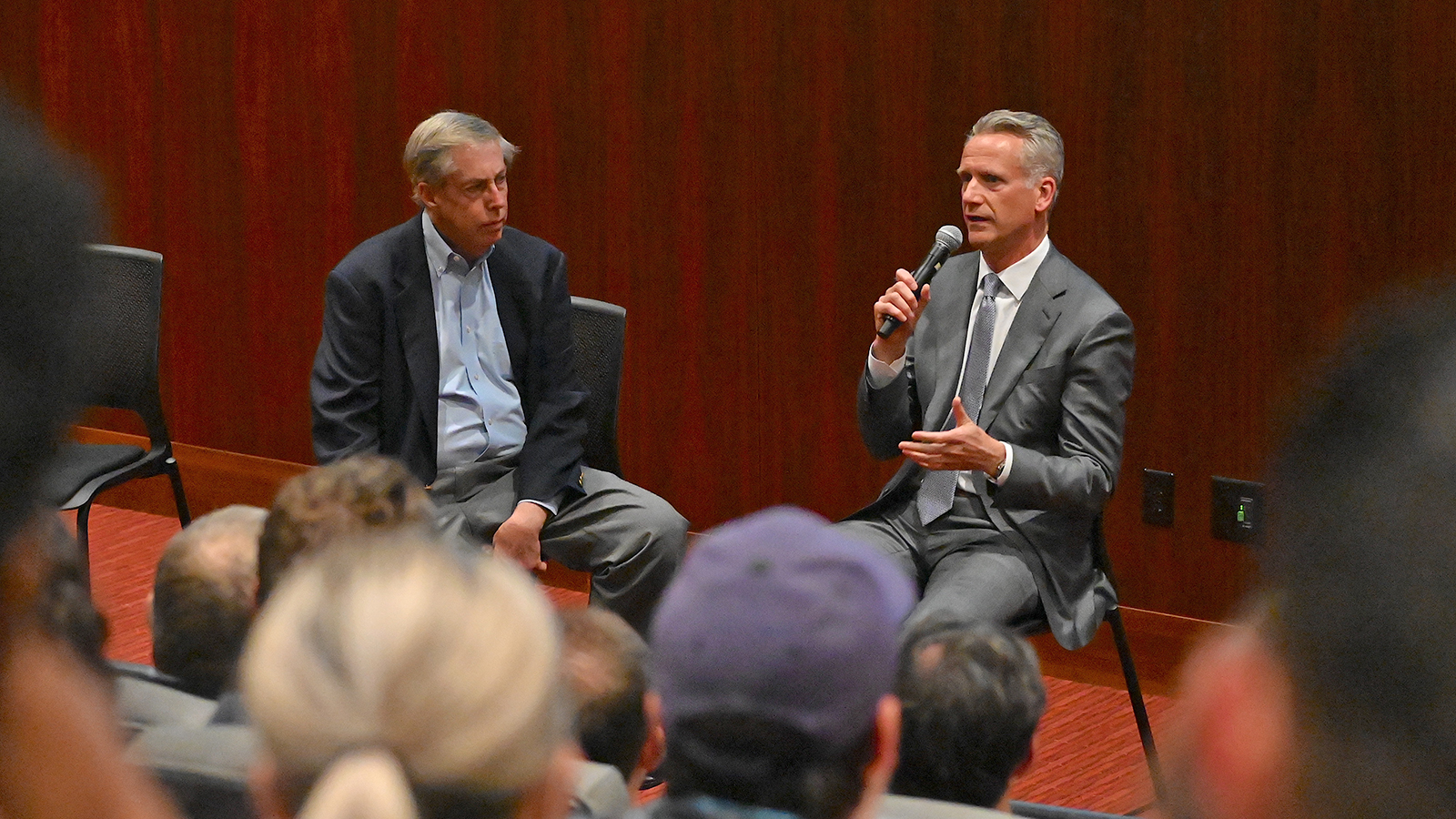
Steve Phelps, president of NASCAR, provided a thoughtful and candid keynote on April 19 to a standing-room-only audience in Turner Theatre, kicking off the fourth annual Sport Management Symposium.
As the head of one of the most popular sports sanctioning and operating companies in the world, Phelps initiated a conversation around the event’s theme, “Sport Sponsorship and Branding in the Digital Age,†discussing how sponsorships, marketing and branding have changed and will continue to evolve in today’s marketplace.
Phelps offered his unique perspective to a crowd of more than 200 individuals – the majority hailing from the Sport Management Department – detailing the strengths and areas of growth for NASCAR. In recent years, Phelps has been credited for being at the “forefront of stock car racing’s turnaround,†helping introduce the Next Gen car, one of the sanctioning body’s most ambitious projects.
For photos of the symposium, visit our .
“Since 2019, we have known nothing but growth,†Phelps said, delving into the organization’s success in sponsorships, revenue and viewership. And he called 2020 NASCAR’s “most important year†since its 1948 founding as the company faced the challenges brought on by the COVID-19 pandemic, as well as its notable decision to ban the Confederate flag at its events.
The banishment of the flag, according to Phelps, was an unpopular choice among some sections of its fanbase. But it was a decision Phelps is immensely proud of, especially having gauged the thoughts, feelings and insights of minorities who work for the organization. These employees shared a striking truth that they often had to “defend why I have to work at a racist company,†Phelps recalled.
Ultimately, the decision among Phelps’ administration was unanimous – abandon the Stars & Bars flag.
“We need to look like the rest of America,†he said. “For those who said, ‘We are not the NASCAR they knew.’ No, this is who we are.â€
“If they (those in favor of the flag) don’t want to participate in our sport, where everyone is welcome, then don’t participate,†he added.
As part of his wide-reaching conversation with Assistant Professor Bill Squadron, Phelps touched on a slew of topics facing his company as well as the auto racing industry. He pointed out NASCAR has an inherent “advantage†over other sports, especially ball-and-stick sports, because NASCAR fans understand the value and return of sponsorships.
“Our fans understand that sponsorships help (the teams) make the car go faster,†he said. It is likely that an MLB or NFL fan might not see the connection be sponsorships and the on-the-field product.
“Sponsorships are the lifeblood of our sport,†he added later.
Phelps addressed ways NASCAR has successfully positioned itself in recent years, most notably with its which has helped produce “the best racing we have ever had in the sport,†he said.
NASCAR has also leveraged partnerships with sports betting firms, varied its race schedule, adding its first road race, and looked to expand its reach through television programming.
“Motor sports were in a bad spot in 2018,†Phelps admitted, but he has been pleased with the growth seen from his company, as well as competitors like Formula 1. He acknowledged that Netflix’s “Formula 1: Drive to Survive†was a huge determining factor in the international organization’s success stateside.
But Phelps also noted that NASCAR still commands 80 percent of all motor sports viewing in the United States.
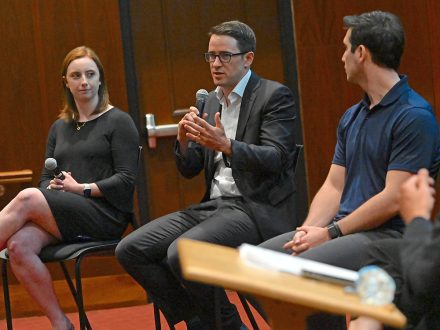
Following Phelps’ keynote, the symposium shifted to panel discussions, beginning with the “Technology and Social Media: New Paths for Sport Sponsorship†panel, moderated by Assistant Professor Mark Cryan.
During the 45-minute conversation, four marketing professionals – three of which are Elon alumni – examined the future of sponsorships and new avenues and trends in the sport industry. Panelists included Chris Bayly ’08, founder of Winstate Sports & Entertainment, Jake Horowitz, senior account manager at 160over90, Lauren (Hoffmann) Street ’03, senior director of marketing and business operations for Richard Childress Racing, and Kara Wagner ’16, G’17, manager of digital experience for the Baltimore Orioles.
Bayly leads Winstate, an independent consulting agency that bills itself as embracing “the challenger mindset,†focusing on innovation and solving customer problems. Each of the four panelists discussed approaches they feel are innovative and what excites them for the future – as well as what platforms are still important.
“Analytics drives our entire organization,†Wagner said, noting that email marketing is still a key driver for ticket sales for her MLB franchise.
Bayly mentioned that he is most excited by the potential he sees in streaming services such as Hulu and Netflix, as well as podcasts.
Horowitz admitted that sponsorships aren’t just about fans and customers, noting they can be an excuse to meet and network with other CEOs and businesses, which could lead to greater financial opportunities.
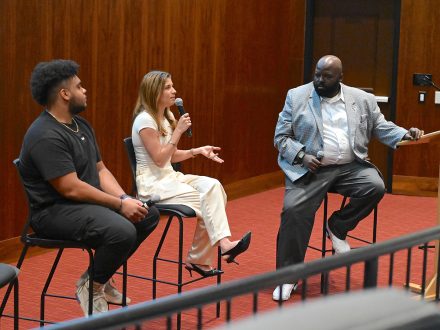
Lastly, Jon Seaton ’23, a defensive lineman for the Phoenix football team, and Ericka Link ’24, a member of the Elon volleyball team, were the featured panelists for a discussion titled “The New World of NIL and College Athletes as Brands.†The two student-athletes have successfully leveraged their name, image, and likeness (NIL) rights and are members of the WWE NIL “Next in Line†program. Assistant Professor Khirey Walker moderated the athletes’ conversation.
With two million followers on his platforms, Seaton is a visible presence online, but he is selective with his partnerships. He estimated he has received more than 300 offers to collaborate but has committed to just 18 partnership deals.
While there are certainly benefits to his popularity, Seaton pointed out that being a content creator can be difficult work. He’s created between 1,300 and 1,400 pieces of content and admitted his role can feel like a grind.
“Nobody sees the consistent level of work,†he said.
When asked by a fellow student how they can establish a social media presence, Seaton reasoned that the content must be authentic.
“We all start with zero followers,†Seaton said. “It needs be true to you. You have enjoy making the content and have fun with it.â€