


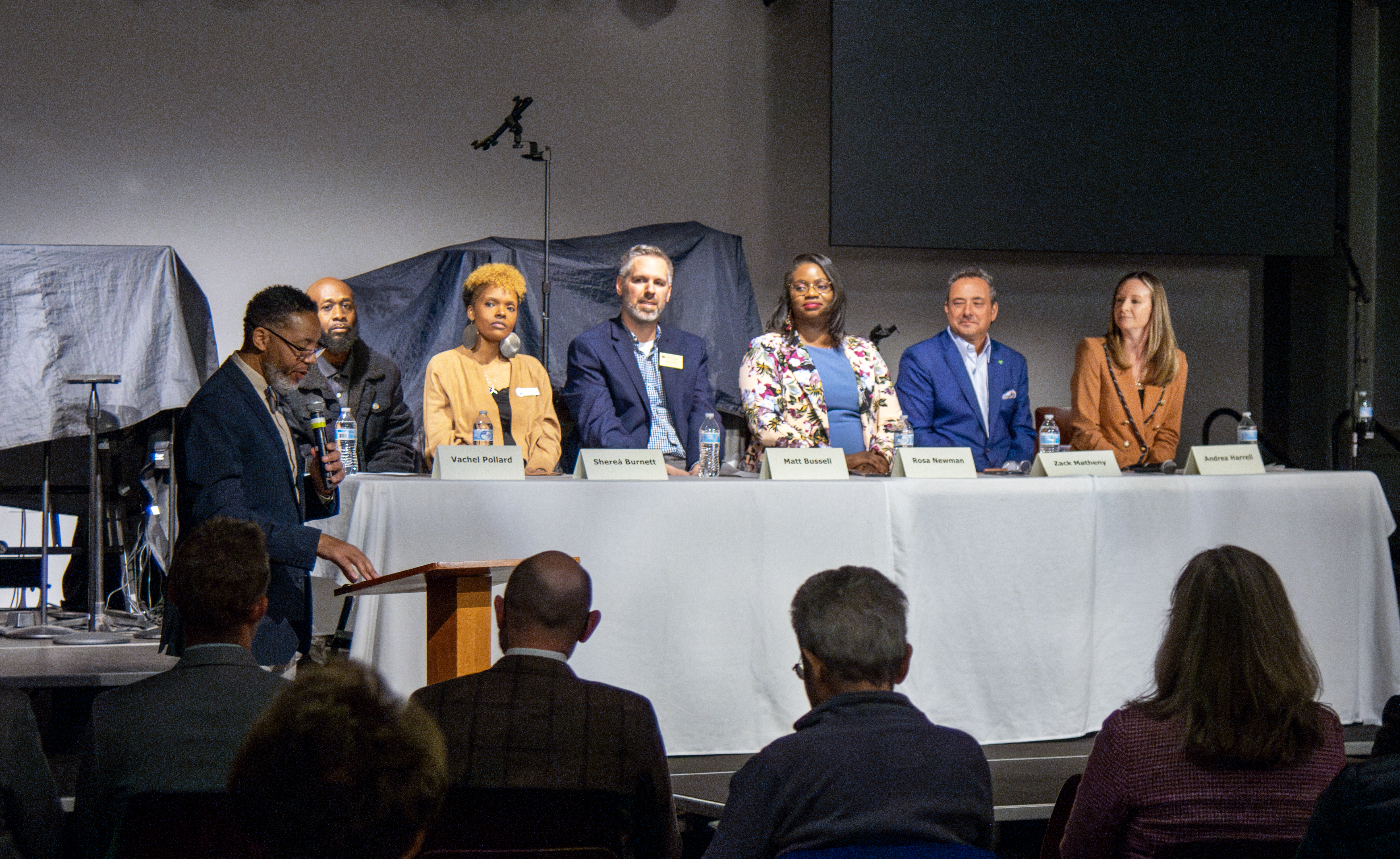
The second annual Law & the Prophets Symposium: Neighboring in a Time of Need convened civic, legal and faith leaders to discuss issues around affordable housing and people experiencing homelessness in Greensboro.
Change begins with discomfort, the kind that pushes us to listen, reflect and see our unhoused neighbors not as problems to solve but as people to know, panelists said at a second annual symposium that explores the intersections of moral and legal issues.
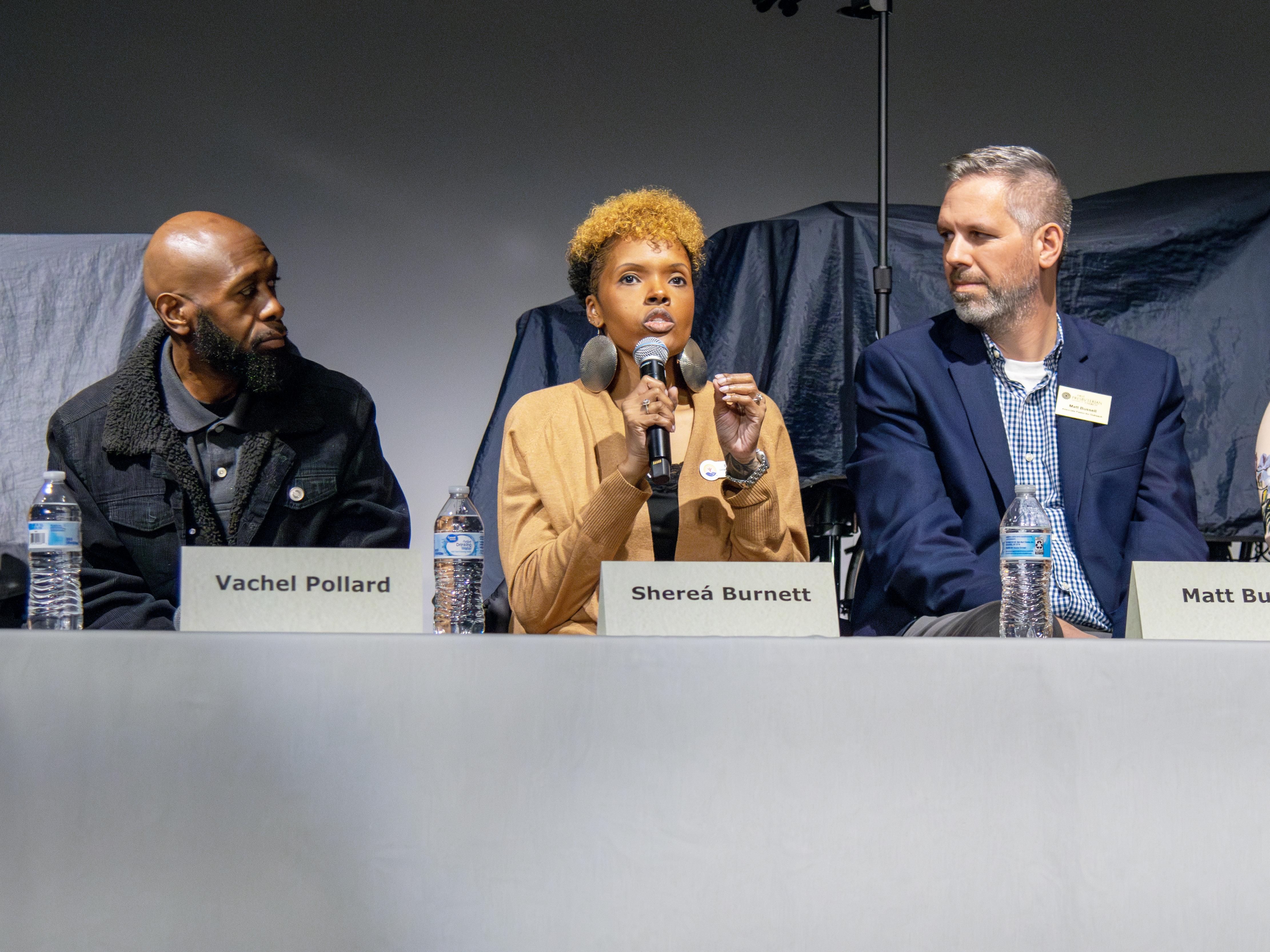
“I make people uncomfortable when I talk about homelessness. We don’t like to see things that challenge what we believe about ourselves, but we can’t fix what we refuse to face,†said ShereĂĄ Burnett L’13, executive director of . “Seeing people means hearing their stories, not deciding for them what they need.â€
For more than an hour, Greensboro’s civic, faith and legal leaders fielded questions around housing insecurity, affordable housing and people experiencing homelessness at the second annual Law & the Prophets Symposium, “Neighboring in a Time of Need.†The symposium was co-hosted by 51±ŹÁÏÍű School of Law and Greensboro’s .
Burnett was joined in the panel discussion by:
- The Rev. Matt Bussell, associate pastor for outreach and mission at ;
- Andrea Harrell L’09, assistant city manager for the ;
- Zack Matheny, president of and outgoing member of the Greensboro City Council;
- Rosa Newman, assistant professor of law at Elon Law; and
- Vachel Pollard, a Greensboro resident who has experienced housing insecurity.
Their discussion was moderated by the Rev. Jeremy Benton, of West Market Street UMC, and Scott Leighty, Elon Law’s associate dean for development and alumni relations. The Rev. Otto Harris, senior pastor of West Market Street UMC, welcomed the audience, encouraging them to listen and think deeply around calls to be a better neighbor.
Newman, who teaches property and real estate law, framed housing as “a moral and legal obligation†intertwined with community well-being.
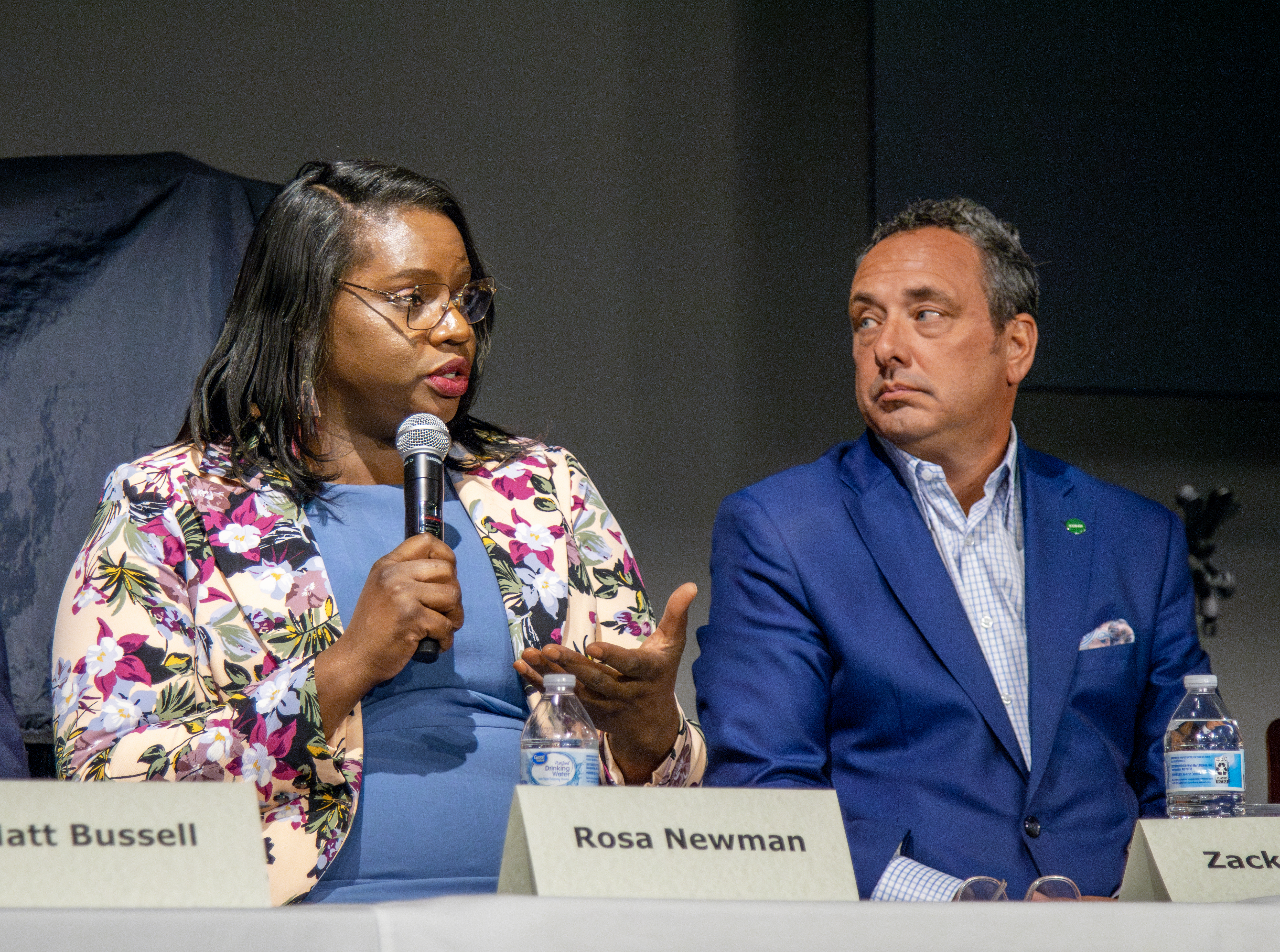
“When someone is paying more than 30 percent of their income for housing and utilities, that housing is no longer affordable,†Newman said, urging broader definitions that reflect real-world costs. “We have to think about who can afford to live here and what happens when they can’t.â€
The theme of the evening was around what it means to be a neighbor, and where our rights, legal responsibilities and religious traditions intersect around that idea. Panelists described “neighbor†not as a matter of geography but as a moral relationship rooted in compassion and shared responsibility.
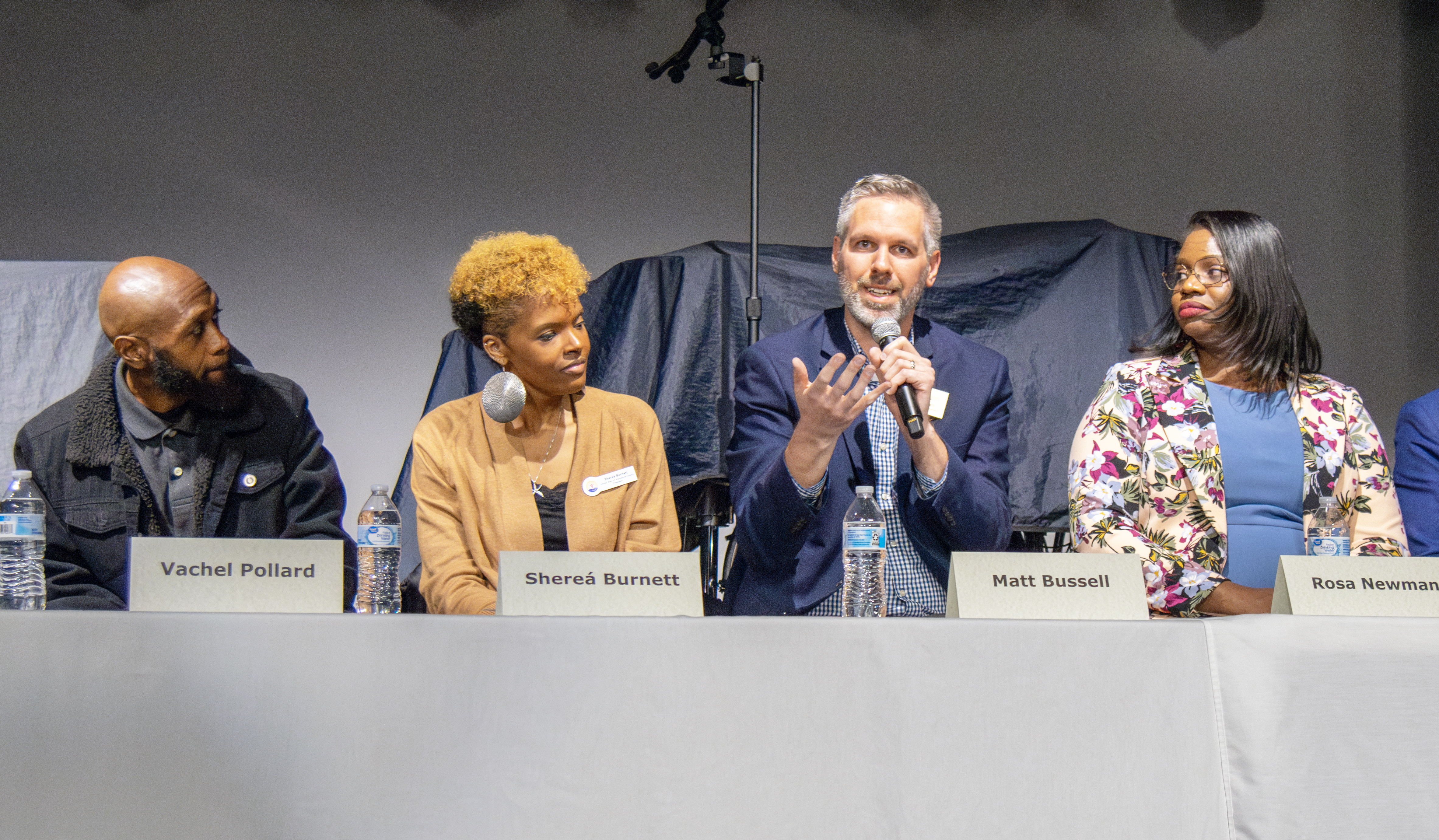
Bussell reflected on the biblical parable of the Good Samaritan, noting that it began with a law student asking Jesus, “Who is my neighbor?â€
“The person who is in need is our neighbor, but so is the person who offers help. Being a neighbor isn’t a legal term — it’s a moral one,†Bussell said. He added that genuine neighborliness takes effort and proximity. “We live in communities that are often divided by income, by race, by opportunity. It takes intentionality to break down those walls, to get to know the people we’ve been taught to see as the ‘other.’ When we do that, we begin to see one another as neighbors again.â€
Harrell emphasized that lasting solutions require collaboration among city departments, nonprofits and faith partners. Matheny agreed, adding that “it takes creativity and partnership to get projects across the finish line†and highlighted recent collaborations between the city and local churches to create new affordable housing developments.
Pollard reflected on the everyday ways people can practice compassion. “Sometimes it’s just a smile or a wave — that doesn’t cost you anything,†he said. “Being neighborly means showing gratitude for being here together and walking beside someone when they need it.â€
Audience members also heard testimony from a Greensboro resident experiencing homelessness for nearly nine years, whose story illuminated how bureaucratic definitions and funding restrictions can exclude people who need help most. Panelists responded to her story with offers to connect her directly with case workers and organizations to remove those barriers.
In closing, Dean Zak Kramer of Elon Law reminded attendees that the evening’s lessons only have meaning if they lead to tangible acts of empathy and neighborliness.
“It’s great to come to an event like this,†Kramer said, “but it only truly matters if you leave changed; if you do something differently tonight, tomorrow, and the next day.â€