


Andrew Monteith's research uncovered a sexual confession authored by a Chicago prisoner around 1930
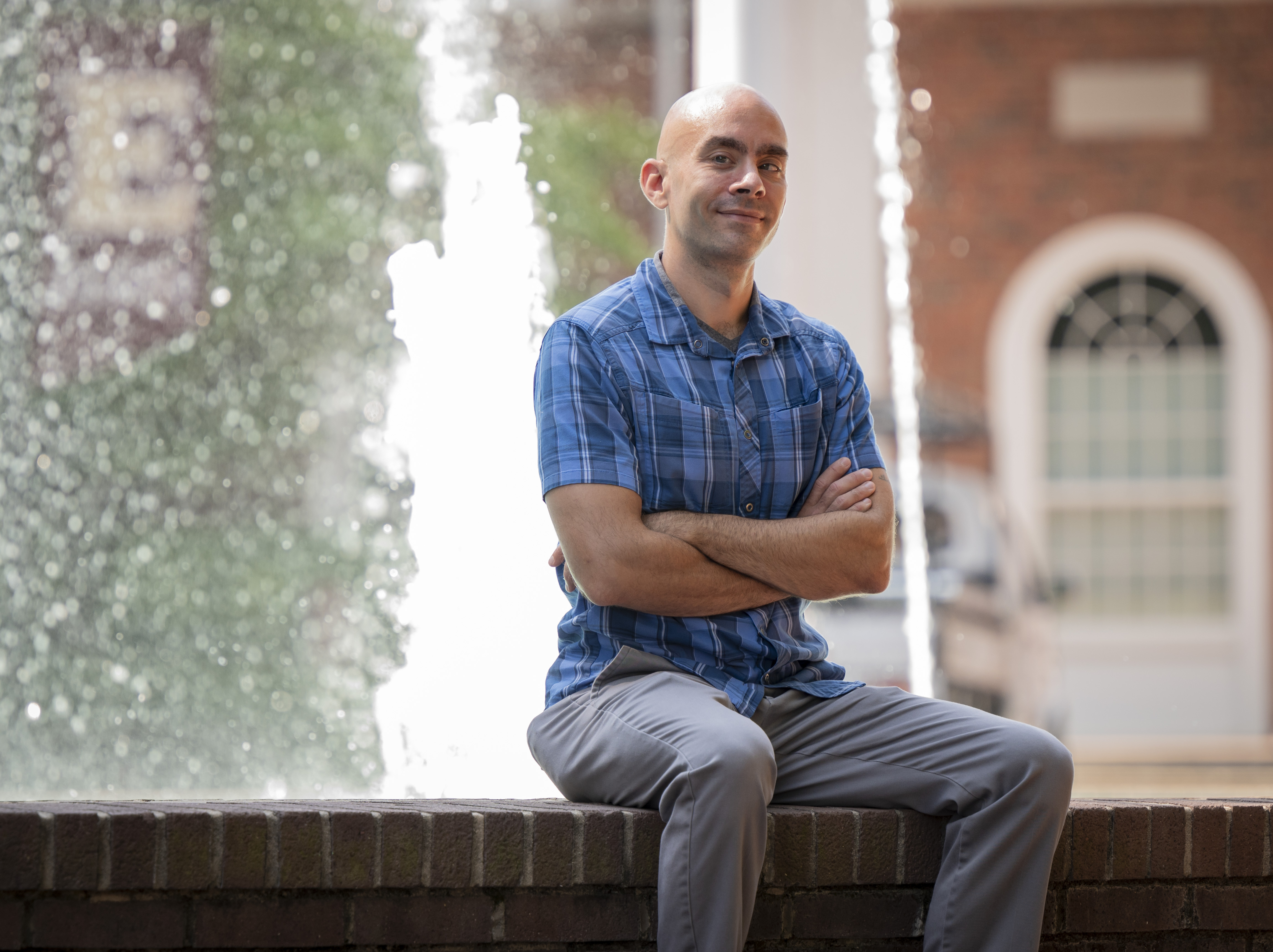
In 2023, Associate Professor of Religious Studies Andrew Monteith was at the Chicago Historical Society, hoping to find material related to the eugenics movement in the records of the Juvenile Psychopathic Institute. Much to his surprise, one of the folders contained nearly 150 pages of autobiographical text addressing sex between men in the 1910s-20s, authored by an inmate at Pontiac Prison. Homosexuality was illegal in this era, and in the late 1920s the Chicago police ran sting operations against gay men. 鈥淗enry鈥� was caught in one of these raids.
Appearing in the most recent edition of QTR: Trans and Queer Studies in Religion, Monteith鈥檚 article focuses on a critical section of Henry鈥檚 autobiography in which Henry explains a polyamorous marriage with two other boys at a Christian boarding school. Henry鈥檚 strict, religious parents boarded him at the Todd Seminary for Boys in Woodstock, Illinois, hoping the experience would “straighten him out.” Single-sex institutions (schools, prisons, etc.) have often had generative spaces for queer relationships, and boys at Todd Seminary were no different. Henry found a romantic triad with 鈥淲ill鈥� and 鈥淛unior,鈥� although Junior鈥檚 role in the marriage leaned asexual.
Monteith employs religious studies methodologies to make sense of the wedding. Rather than assuming the ceremony was satire simply because of the boys鈥� age, Monteith points to Henry鈥檚 own description of the wedding as serious business. The ritual objects involved鈥攑articularly a homemade wedding license that named all three boys鈥攈elped them define and validate their union. Henry鈥檚 account is tragic, however, since graduation meant separation, and Henry was never able to recover another union like it. The irony is that for someone with Henry鈥檚 personality, the Christian boarding school offered a more stable environment for queer romance than the more freewheeling life of gay Chicago did.
Henry鈥檚 imprisonment took a psychological toll, and his autobiography expresses ambivalence about his sexual orientation. On one hand, he defends his queer marriage as beautiful, but on the other, he explains that he wishes to undergo conversion therapy at an asylum. After leaving Pontiac Prison, Henry married a woman and raised multiple children.
The full open-access article can be found online: